
Intelligence serving human individuality

Understand
before
deciding.

Every person has a journey. INA was conceived to connect evidence, recognize contexts and deepen our understanding of human development.

Illustrative scene of a teacher listening to students during an activity
The starting point is always a person.
POWERED BYSchoolasticHUMAN FOUNDATIONS. TECHNOLOGICAL EXPRESSION.01 — 07
01 / The essence

A person is more
than any data point.

Neuroartificial Intelligence™ is conceived as an interpretive, longitudinal and explainable architecture. It aims to bring signals and contexts together to support an understanding of human trajectories.

The Method of Seeing is its foundation: recognizing individual differences, considering circumstances and acknowledging the limits of every interpretation. Responsibility for decisions remains human.

01Context before conclusions

A signal gains meaning when considered alongside a person's history and circumstances.

02Evolving trajectories

Following changes over time without reducing a person to a fixed snapshot.

03Human responsibility

Interpretations must be understandable, open to challenge and subject to revision.

02 / Areas of application

A shared foundation.
Different human contexts.

These areas emerge from INA's published genealogy. Education is the starting point; new applications develop through partnerships and dedicated research programmes.

Illustrative classroom scene of listening and learning
OUR ORIGINS · EDUCATIONAL SOLUTIONS

Education

Understanding students to support their development. INA proposes organizing evidence of their journey, understanding barriers and supporting guidance from teachers, families and teams.

In Education, we present Pedagogicamente.ai and Schoolastic's experiences in self-awareness and development. They remain available through their current platforms.

Discover Pedagogicamente.ai ↗

Reconheça-me

Exploring behavioural patterns and social-emotional skills to begin a journey of self-awareness.

Explore Reconheça-me ↗

Desenvolva-se

A journey of self-observation and reflection on social-emotional skills, education and professional development.

Explore Desenvolva-se ↗
Foundations in the books

Antologia Fundacional, chapter 27, “INA Educação”, pp. 288–292. Education is presented as the first application area and the birthplace of the Method of Seeing. INA's architectural evolution requires its own validation; the existence of these solutions does not establish the validity of the entire architecture.

The educational journey

Observe, understand,
guide and follow up.

  1. Planning the observation

    Drawing on the learning journey, the teacher receives a focus for observing the student in school settings.

  2. Observing and recording

    The teacher records an observation through EAV — Entity, Attribute and Value. The information is normalized in the database, retaining its source and context.

  3. Connecting and forming hypotheses

    Scientifically plausible relationships with dimensions and molecules open up hypotheses, considered in light of context and other authorized school data.

  4. Guiding and following up

    A broader view supports human decisions about educational interventions. The history preserves what was observed, the support offered and the changes noticed.

  5. Observing again and reviewing

    Alerts highlight the need for further observations and interventions. The teacher reviews hypotheses and continues the educational journey.

Longitudinal pedagogical memory. Each new observation adds to the journey and may change its interpretation.


Illustrative scene of a healthcare professional listening to a woman
OPEN AREA FOR RESEARCH

Health and human development

Investigating how organizing functional signals and longitudinal histories can improve communication between schools, families and care teams.

INA Health has not been clinically validated. The proposal is to support continuity of information, with interpretation and decisions entrusted to qualified professionals.

Explore this area with us ↗
Foundations in the books

Antologia Fundacional, chapter 28, pp. 293–296; International Context, chapter 29, pp. 263–266. The international edition adopts “organization of functional signals” and makes clear that hypotheses about benefits still need to be tested.

Illustrative scene of collaboration and learning between professionals from different generations
OPEN AREA FOR RESEARCH

Human capital and work

Exploring the relationship between individuals, roles, teams, culture and learning. Understanding the conditions that support development and sustainable participation at work.

Prioritizing education and development, with human review. No ranking of people or automated hiring, promotion or dismissal decisions.

Explore this area with us ↗
Foundations in the books

Antologia Fundacional, chapter 29, pp. 297–300; International Context, chapter 30, pp. 268–273. Work is approached as an environment for development, considering the relationship between resources, demands, context and individual trajectories.

OPEN AREA FOR RESEARCH

Public administration
and territorial intelligence

Bringing together aggregated evidence from education, health, social assistance and work to investigate local needs and support service planning.

Public purpose, data protection and human oversight. The proposal neither assigns social scores to citizens nor automates access to rights.

Explore this area with us ↗
Foundations in the books

Antologia Fundacional, chapter 30, pp. 301–305; International Context, chapter 31, pp. 275–280. INA Gov is proposed as an interpretive layer for territorial and cross-sector evidence.

Experiences that support development

Culture, Sport and Human Development

Every experience can open pathways for development. We connect INA with music, dance, cultural and sporting initiatives to understand trajectories, recognize aptitudes and support educators, instructors and coaches.

01

Arts and culture

Music, dance, theatre and literary mediation as spaces for expression, reflection and human development.

02

Sport and education

Football and other sports, with attention to learning, cooperation and each participant's journey.

03

Youth programmes

Projects combining cultural and sporting experiences to foster participation, relationships and development.

Illustrative scene of a coach talking with athletes on a football pitch
ESTABLISHED PARTNERSHIP · SPORT AND EDUCATION

No Gramado

The partnership connects the sporting journey with learning aptitudes and social-emotional dimensions.

A complementary layer to sports analysis, with human participation and no diagnosis or social-emotional ranking.

Foundations and broader applications

Antologia Fundacional, pp. 5–7, includes literary mediation among its fields of application. Manifesto, p. 69, places literature within the expansion of the Method of Seeing beyond school. Bringing culture, sport and youth programmes together in this area organizes INA's activities; the No Gramado partnership establishes a concrete link with sports education.

Developing a cultural or sporting project? Let's build it together.

Contact us ↗
03 / Research and collaboration

Good questions
deserve collaboration.

We invite researchers, universities, professionals and institutions to investigate INA's possibilities and limitations with us.

Published foundations are the beginning of the conversation. The next step is to build protocols, challenge hypotheses and produce evidence in each context.

Research with INA ↗
Illustrative scene of researchers discussing documents and hypotheses
01

Studies and validation

Investigating the quality of interpretations, the limits of the method and agreement between observers.

02

Pilot projects

Designing context-specific studies with jointly defined objectives, protocols and evaluation criteria.

03

Ethics and explainability

Assessing understanding, the ability to challenge interpretations, privacy and the consequences for people.

Where does this invitation come from?

Essencial, pp. 122–125, proposes that longitudinal observations can generate questions for science, preserving the distinction between correlation, hypothesis and conclusion. Antologia Fundacional, pp. 6–7, presents INA as a theory, an architecture and an applied research programme. The lines above are an editorial organization of this agenda to welcome collaboration proposals.

Research and cross-cutting technologies

Information lifecycle governance

Information remains. The conditions for using it may change.

INA investigates the responsible use of information over time, with potential applications across organizational, scientific and technological contexts.

We invite institutions and researchers to explore and validate these possibilities with us.

Explore this research area with us ↗
04 / Genealogy

One line of thought.
Four books. New perspectives.

A eVUCAção do Século XXI — Método do Olhar (21st-Century eVUCAtion — The Method of Seeing).
Published foundations connecting the initial challenge, conceptual development and international dialogue.

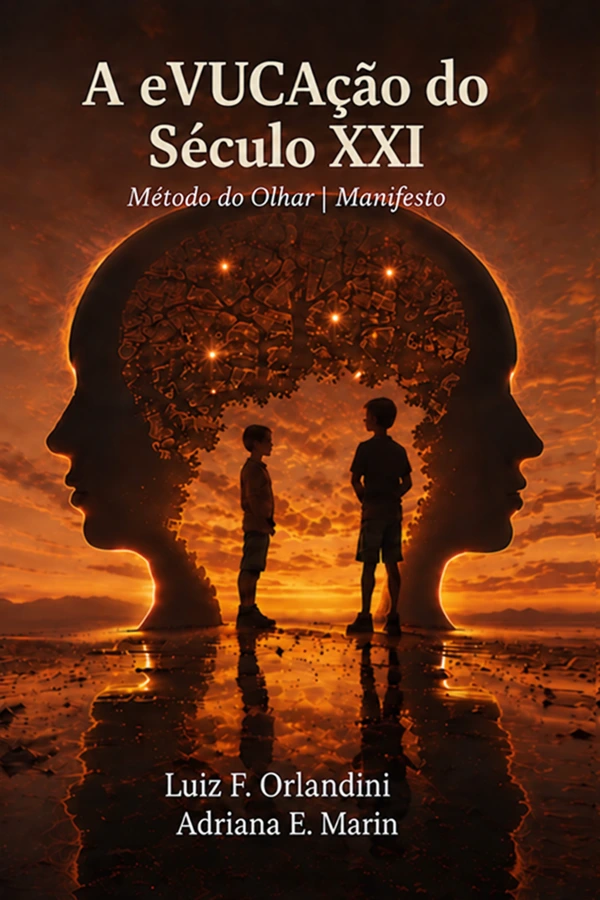
01 / ChallengeManifesto cover

Manifesto

Why change how we see? An invitation to rethink certainties and recognize potential.

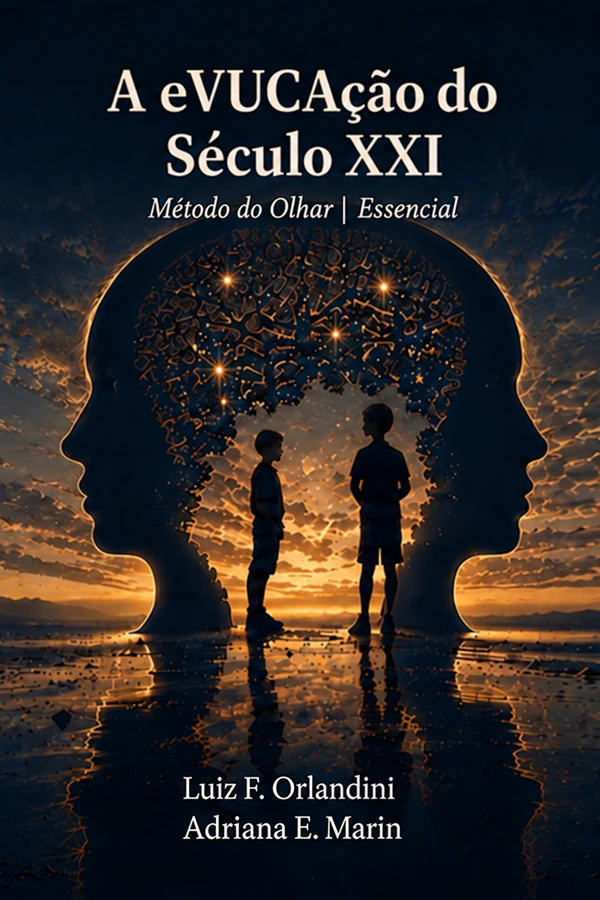
02 / DevelopEssencial cover

Essencial

How can this perspective be structured? Concepts and proposals that develop the method and the journey towards INA.

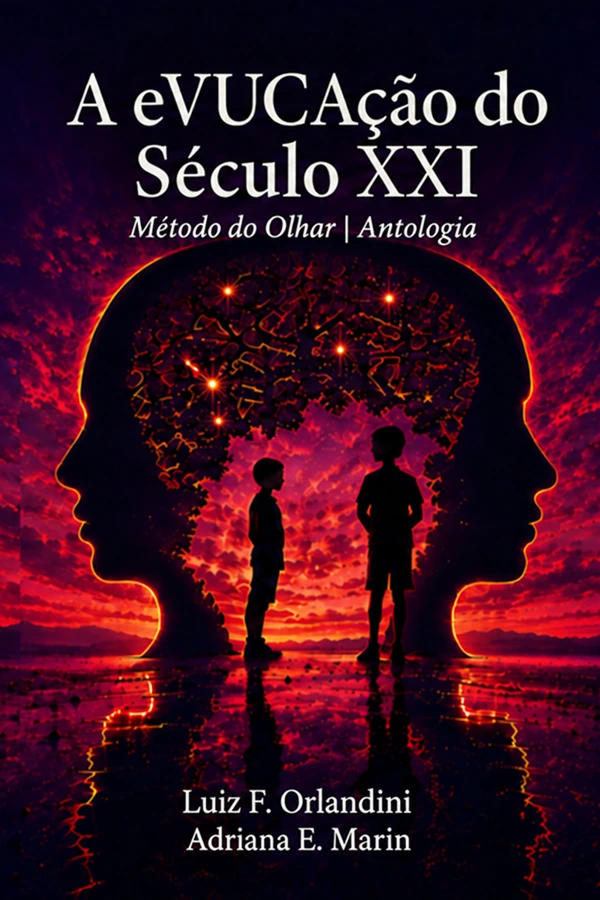
03 / GroundAntologia Fundacional cover

Antologia Fundacional

Deepens, formalizes, challenges and documents the foundations, genealogy and methodological architecture.

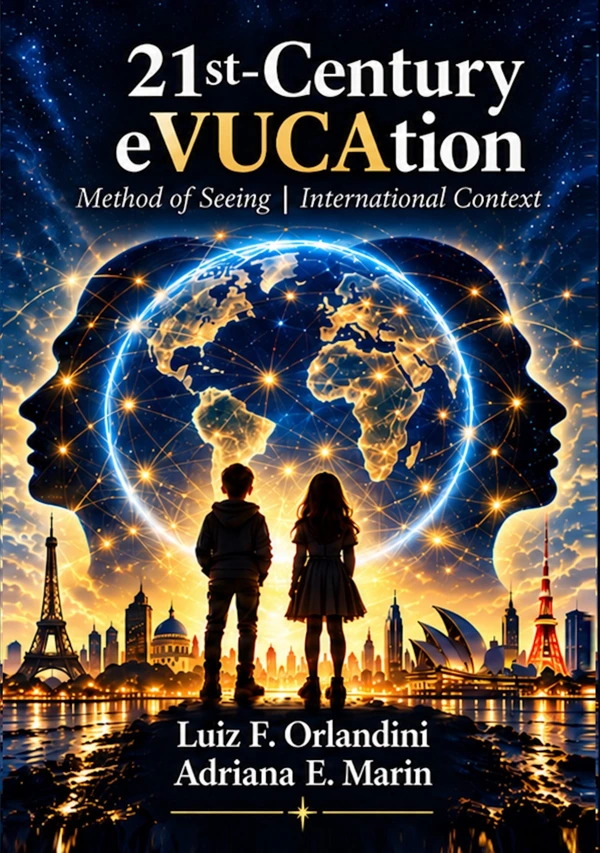
04 / EngageInternational Context cover

International Context

Broadens international dialogue on the foundations, responsibility and limits of artificial intelligence.

Explore the editions on Amazon. Luiz F. Orlandini · Adriana E. Marin. Original book titles and covers are retained; translated synopses do not imply English editions of the Portuguese books.

From the Method of Seeing to INA

The books make the conceptual journey visible. INA translates this thinking into a proposed technological architecture oriented towards human understanding.

05 / Architectural principles

Connect evidence.
Preserve our humanity.

A conceptual reading of INA: how its principles guide the organization of signals and the responsible formation of hypotheses.

01

Observe in context

Consider the source of evidence, the conditions in which it was produced and what it supports.

02

Connect without reducing

Bring dimensions of development together while preserving the distinction between observation and interpretation.

03

Follow over time

Recognize changes, continuities and new evidence. A hypothesis may need revision.

04

Explain and acknowledge limits

Make interpretations understandable, seek counterevidence and acknowledge when there is insufficient basis for a conclusion.

Non-diagnostic No deterministic labels Human oversight
06 / Authorship

A shared
perspective.

The four books form part of the authorial journey of Luiz F. Orlandini and Adriana E. Marin. The Method of Seeing is a shared creation.

Technology and human development

Luiz F. Orlandini

Entrepreneur, originator of Neuroartificial Intelligence™ and coauthor of A eVUCAção do Século XXI — Método do Olhar. His work brings together education, technology and an understanding of human individuality.

Education and human experience

Adriana E. Marin

Teacher and coauthor of A eVUCAção do Século XXI — Método do Olhar. She contributes to the foundations connecting education, affectivity and human development.

07 / Contact us

What question
brings us together?

Tell us your area of interest and what you would like to explore with INA. We welcome research proposals, partnerships and conversations about institutional applications.

Use the button to prepare a message for Schoolastic on WhatsApp. You review and send the message in the app.

Prefer the institutional contact form? ↗

These fields are not stored on this website. Please avoid including other people's personal or clinical data.

AI-generated illustrative images. They do not depict Schoolastic teams, clients or projects.

Full synopsis

Luiz F. Orlandini · Adriana E. Marin

Explore on Amazon ↗